
Our free service helps renters and rental providers resolve bond, compensation, repairs and excessive rent disputes.
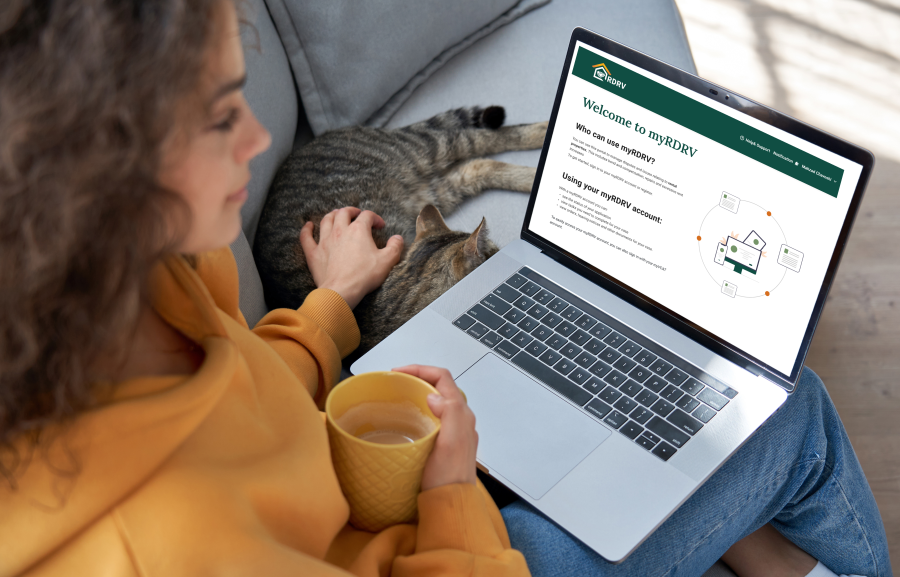
RDRV is an early resolution and case management service offered by VCAT. To get started, all you need to do is make an application using our online portal, myRDRV.
Gather your informationTo complete your application, you will need to provide information related to your dispute. This includes things like your lease or rental agreement, evidence and any notices that have been sent. | 
|
Your rental agreement
Your rental agreement (lease) contains key details we may need, including:
- the start date of your rental agreement
- names of every renter listed on the agreement
- real estate agent details (if applicable)
- rental provider information (i.e. the owners of the property)
Note: The owner's name is usually on the lease. If you can’t find it, ask your real estate agent for their information.
You do not have to upload your rental agreement but, if you do, it will help us verify your application. If you don’t have a copy of your rental agreement, you can still apply to RDRV. You’ll need to provide as much detail as possible about your tenancy, including the rental provider’s name and contact details.
Details about your dispute
- Be ready to describe what happened, including:
- what issue you’re experiencing (e.g. rent increase, delayed bond refund, repairs needed)
- when the problem started
- what outcome you’re hoping for any urgent concerns (e.g. health or safety risks)
Providing clear details helps us assess your case more quickly.
Communication history
Depending on your dispute, if you’ve already discussed the issue with your rental provider, real estate agent, or other renters, please include copies of any relevant communication.
For example:
- emails
- text messages
- letters
- phone call records
- screenshots of conversations
This helps show what steps you’ve already taken to resolve the issue.
Supporting evidence
Depending on your dispute, you may need to provide:
- photos (e.g. property damage, maintenance issues)
- receipts (e.g. costs for urgent repairs)
- inspection reports
- reports or notices from Consumer Affairs Victoria (suggested for excessive rent increase applications)
- independent assessments (e.g. a quote from a tradesperson, an inspector’s report)
If you don’t have all the documents listed, you can still apply - just provide as much relevant information as possible.
Apply using myRDRV
Create an account
To apply for RDRV to assist with your rental dispute, you’ll need to create an account using myRDRV. With a myRDRV account, you can:
Once your account is set up, you can log in and start your application. | 
|
When you submit an application, you’ll receive a confirmation message, and one of our resolution coordinators will be in touch. You can check the status of your application at any time by logging back into myRDRV.
Guide to submitting an application through the portal
What happens after you apply
When we receive your application, it will be assessed and assigned to one of our resolution coordinators to review. They will contact you by phone or email to discuss what happens next.
- Most disputes are resolved within a month, but this may vary depending on the case
- If your dispute cannot be resolved through RDRV, we’ll tell you where to go
Where to get help
If you need help, please get in touch.
We’re here to guide you through the application process, answer any questions, and ensure you have the support you need.
- Call our helpline on 1300 01 7378
- Email us at cases@courts.vic.gov.au
- See our list of support services
- Get an interpreter by calling 2M Language Services on 03 7036 7578
- Visit our Frequently Asked Questions
Additional information
This section gives you extra guidance that can help during a dispute. It includes useful context, related rights and responsibilities, and other details that can support your decision making.
-
RDRV is an appropriate dispute resolution and case management service provided by VCAT.
We help renters and rental providers resolve rental issues without needing to go to a hearing.
Our resolution coordinators are trained mediators who can help both parties discuss the issues. If an agreement cant be reached, we can arrange for a hearing, so a member can decide the outcome.
An application to RDRV is also an application to VCAT, so you don't need to apply again if you need a hearing.
-
We can help with disagreements about bonds, compensation, rent increases and repairs. If your issue falls outside these topics, click here to see who can help.
-
Anyone renting or managing a rental property in Victoria can use RDRV. This includes renters, rental providers, real estate agents, rooming house residents and operators, caravan park residents and owners and site tenants and owners.
-
Yes. If the rental property is in Victoria and both parties agree to take part, you can still use RDRV's early resolution service.
Early resolution can help you reach an agreement quickly and informally, even if the parties live in different states.
However, where parties live can affect whether VCAT can make a binding order or hear the case. This is called jurisdiction.
If VCAT does not have jurisdiction:
- You can still use our early resolution service.
- We cannot make binding orders.
- We cannot arrange a VCAT hearing.
Before you apply to RDRV, think about:
- Whether the other party is likely to participate
- Whether you’d need to enforce the outcome later.
-
If the renter and rental provider cannot agree on a solution your dispute will continue to a hearing. Your resolution coordinator will refer your dispute to a different team, and they will help both parties prepare their case, and get ready for the hearing.
-
Because an application to RDRV is also an application to VCAT, you don't have to apply again, or provide the same information twice.
You will need to give evidence and present your side to a member at the hearing.
If you have to go to a hearing, you may have to pay an application fee. If the hearing is longer than a day, hearing fees are payable. You can find information about costs, concessions, and discounts here.
-
If you want to engage in early resolution and interstate jurisdiction applies to your case, there are some limitations but it will usually only impact you in two circumstances:
Even though VCAT cannot provide an order or hear a case with interstate jurisdiction, there are alternative pathways you can take.
If jurisdiction applies, and you want the agreement to be enforceable
If VCAT does not have legal authority to issue a binding order, we can arrange a referral to the Magistrates' Court so they can issue an order.
- Our referral will include the details of your agreement.
- Once we make the referral, your VCAT case will be struck out.
- You will then need to follow any steps required by the Magistrates' Court to make an order that reflects your agreement.
If you need a hearing because you couldn't reach an agreement.
If VCAT does not have legal authority to hear your case, the hearing pathway will be through the Magistrates' Court. You will need to apply directly to them.
If enforcement is important, going straight to the Magistrates’ Court may be the best option.
-
VCAT's jurisdiction rules can affect what happens after early resolution.
VCAT does not have jurisdiction when:
- all parties are individuals (not companies), and
- the parties' primary residential addresses are in different Australian states.
VCAT usually has jurisdiction when:
- all parties’ primary residential addresses are in the same Australian state
- any party is a company
- if Homes Victoria is a party.
VCAT may have jurisdiction when:
- any party’s primary residential address is in the Australian Capital Territory, Northern Territory, or any other Australian territory.
- any party lives overseas.
If you reach an agreement and need it to be enforceable
If VCAT does not have jurisdiction to make a binding order, we can refer you to the Magistrates' Court.
Our referral will:
- include the details of your agreement
- result in your VCAT case being struck out.
You will then need to follow any steps required by the Magistrates' Court to have an order made.
If you need a hearing
If you cannot reach an agreement and VCAT does not have jurisdiction, you must apply directly to the Magistrates' Court.
Contact us about jurisdiction
For more information about VCAT jurisdiction:
- Email renting@courts.vic.gov.au
- Call 1300 01 7378
If having an enforceable outcome is important to you, applying directly to the Magistrates' Court may be the best option.